SIGN UP FOR MY EMAIL TO RECEIVE YOUR FREE SAN FRANCISCO PLANNING GUIDE.
- Home
- Best Places to Stay
The Best Places to Stay in San Francisco: What It's Like to Stay in Each District

By: Jill Loeffler • Updated: July 26, 2026
With nearly 300 hotels spread across dozens of very different neighborhoods, choosing where to stay in San Francisco is one of the trickiest parts of planning a trip here.
The right area will depend on the trip you're planning. You'll want to think about how much you want to be in the middle of the action, whether you're here to sightsee or for a conference, how much room you need, and what you want right outside your door.
Below I'll walk you through what it's actually like to stay in each major district, including the feel, the hotels, the transit, and who each one suits. Plus, I've included a few practical tips at the end that will make booking easier.
I'm Jill, and I live right here in the heart of San Francisco. I've helped visitors choose where to stay for almost two decades.
You can either start by checking out my video about what it feels like to stay in each district or read on for more details.
SFTourismTips is made possible by readers like you! If you book through my links, I may earn a small commission at no extra cost to you. Thanks for your support! Learn more.
Union Square
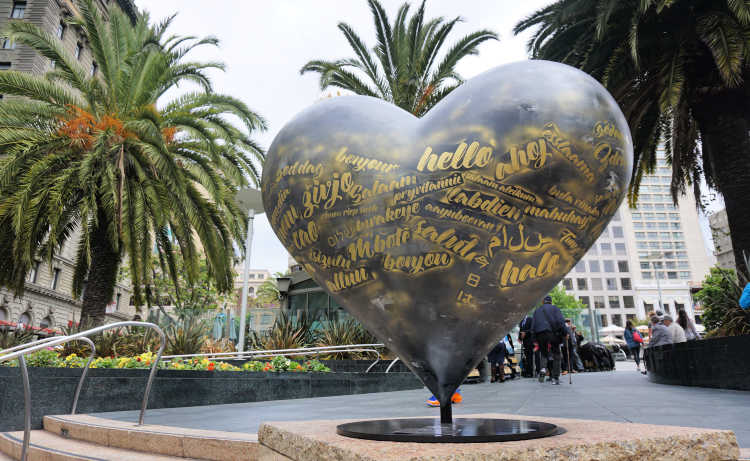 The main plaza has three to four colorful hearts all year long. They are part of a fundraiser for a local hospital, and they rotate a few times a year.
Staying in Union Square feels very much like staying in the middle of a big city.
This is San Francisco's main hotel district, so when you step outside your hotel, you're immediately surrounded by activity with cable cars going by, buses pulling up, people heading to dinner or a show, and a steady flow of locals and visitors.
It feels busy, central, and urban.
It's also one of the easiest places to stay because it's so central. You can get almost anywhere from here without a car including BART, Muni trains, cable cars, and multiple bus lines all stop in or near the district.
You can take the F streetcar to Alcatraz and Fisherman's Wharf, grab a light rail train to Golden Gate Park, and catch the Golden Gate Transit buses along Mission Street straight to the Golden Gate Bridge.
Many hotels are a short walk from breakfast, your morning coffee, and dozens of restaurants, with shopping and nightlife all around.
Union Square also has one of the widest ranges of hotel prices in the city, including historic luxury hotels, well-known mid-range chains, and more affordable options all within a few blocks of each other.
Several Union Square hotels are in older buildings. They're generally well maintained and clean, but many have smaller rooms than you might be used to in newer hotels.
If you plan to spend most of your time out exploring, that usually isn't an issue, but if room size is a high priority, check the photos and room descriptions carefully.
It's also worth knowing that the feel of the area changes as you move west of Union Square toward the Tenderloin. A few blocks in that direction can feel rougher, especially at night. So if a hotel is much cheaper than others nearby, double-check the exact location and surrounding streets before booking.
Overall, Union Square works best if you love the energy of staying in the heart of a city, want easy transportation, and want lots of dining options. It's less ideal if your priority is a quiet, residential feel or scenic surroundings right outside your door.
My Top Picks
Here are a few of my top recommendations:
- The Westin St. Francis on Union Square: 4-star hotel, right on the square, amazing views from many of the rooms, right on the cable car line, more about this hotel
- Orchard Hotel: 4-star hotel and a Travel Sustainable property, highly rated and just 2 blocks from the square, close to Chinatown, dining on site, reviews, and more about booking here
- Handlery Union Square: 3-star, highly rated, outdoor pool, gym, and a great location; more details on the Handlery here
>> Find additional recommendations and tips for staying in Union Square
Additional Information on Union Square
Things to Do in Union Square: Find tips and ideas on what there is to see and do here. It also includes information on places close by. Discover more here.
Theater Calendar: If you would love to see a show during your stay, this is where you will find a calendar of upcoming performances. The largest productions are usually booked about a year in advance, while smaller theaters add new performances all of the time. Check back often to find new listings for your stay.
SF Museum of Modern Art: Just a short walk away, the SF MOMA is another reason why Union Square is one of the best places to stay in San Francisco. This modern art museum offers thousands of pieces from well-known artists from around the world.
SFO to Union Square: Use my comprehensive guide to help you get from the San Francisco International Airport to Union Square.
Fun Tours and Activities Around Union Square
Fisherman's Wharf
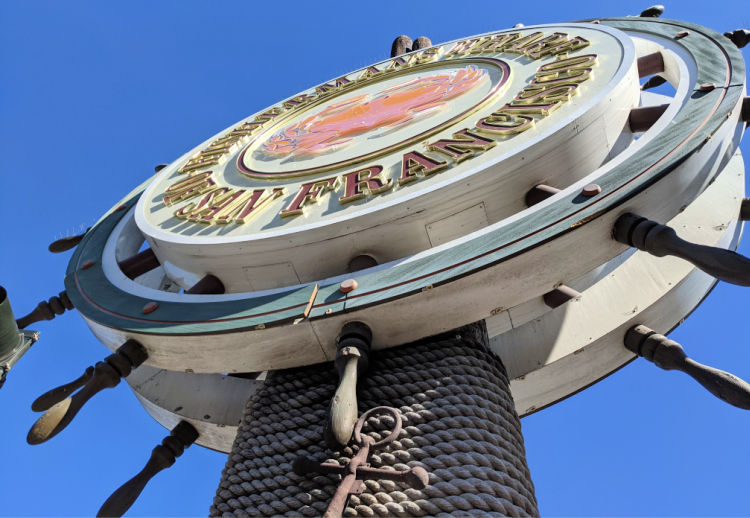 The famous Fisherman's Wharf sign is at the intersection of Jefferson and Taylor Streets. It's a great photo opportunity!
Staying in Fisherman's Wharf feels very different from staying downtown.
This is one of the most popular areas for first-time visitors and families. It's busy during the day, very visitor-focused, and designed to be easy to navigate. The streets are mostly flat, the sidewalks are wide, and everything feels geared toward sightseeing rather than city life.
You'll be close to the waterfront, where you can grab the ferries to Alcatraz, head out on a bay cruise, or take one over to Sausalito.
Pier 39 and Ghirardelli Square offer plenty of shopping and dining. You can also jump on a bus straight to the Golden Gate Bridge Welcome Center, or hop on a day tour to places like Muir Woods and Napa.
For more on what's right here, see my guide to the best things to do in Fisherman's Wharf.
Hotels here tend to be shorter buildings. They are usually three to five stories rather than tall high-rises, and many are well-known, big-name brands.
Rooms are often a bit more spacious than what you'll find in older downtown hotels, which is one reason this area works so well for families and travelers who want a little more breathing room.
The overall feel is very touristy. It's predictable, straightforward, and designed for visitors. The main tradeoff is nightlife: most restaurants close early, usually around 8 or 9 pm, and only a handful of bars stay open past 10 pm.
But you can easily take a rideshare to North Beach or another district if you want to see what the city is like at night.
Overall, Fisherman's Wharf works best if you want a simple, walkable home base with easy sightseeing, larger hotel rooms, and a family- and pet-friendly feel.
It's less ideal if nightlife is a major priority — but it's a very comfortable option for a first visit.
My Top Picks
These are a few of the best places to stay in San Francisco in this district:
- Argonaut Hotel: 495 Jefferson Street, nautical-themed hotel across the street from the waterfront, western side of Fisherman's Wharf, 4.5-star
- Hotel Zoe: 425 North Point Street, two blocks from the waterfront and all of the action, 4-star
- Hotel Zephyr: 250 Beach Street, a funky hotel near the waterfront, fun games and activities in the courtyard, 3.5 stars
- Courtyard Fisherman's Wharf: 580 Beach Street, two blocks from the water, nice and clean, easy to get around the district, 3-star
Read additional recommendations and recent guest reviews
Find additional lodging recommendations in Fisherman's Wharf
Find more family-friendly hotels in SF
More Planning Tips for Staying in Fisherman's Wharf
Things to Do in Fisherman's Wharf: You can also use this page to plan your visit. It's a list of the best things to do in this district by the water.
Where to Eat: My guide offers information on the best places to eat around Fisherman's Wharf. You'll find ideas for breakfast, lunch, and dinner as well as some options for seafood. Check it out here.
SF Bay Cruises: Find a list of the best options and book your tickets before you arrive. Details here.
Tips to Visit Alcatraz: Millions of people visit Alcatraz every year. If it's your first time in San Francisco, make sure to check out the tours to Alcatraz to learn more about this infamous former federal prison. More info here.
Pier 39: This popular spot is home to dozens of shops, restaurants, and activities. Some of the best include the 7D Experience and the Aquarium of the Bay. Learn more about Pier 39.
SF Airport to Fisherman's Wharf: Use my guide to help you plan your transit from SFO to Fisherman's Wharf.
Getting Around SF: This guide offers my tips on how to get from this district to other top districts and attractions around San Francisco. Find out more here.
More Fun Ideas for Fisherman's Wharf
Nob Hill

Now let's head up our steep streets to Nob Hill, which feels very different from Union Square and Fisherman's Wharf.
Most of the hotels here are clustered right at the top of the hill around Grace Cathedral, one of the highest points in the city, so you'll find sweeping views, grand architecture, and a quieter, more refined atmosphere.
The hotels tend to be more upscale, and many have excellent on-site restaurants, bars, and lounges.
Because these hotels sit at or near the top of one of San Francisco's biggest hills, staying here takes a little more effort.
Walking down the hill is easy. Walking back up is not something most people want to do at the end of a long day.
The good news is the area has lots of transit: the California Street cable car line runs right through the hotel district, there are a few buses, and rideshares are easy to get. You'll likely spend a bit more on transit staying here.
Nob Hill has a very local, residential feel. It's quieter, more neighborhood-focused, and less touristy. You're also a short walk down the hill to Chinatown and Union Square.
Overall, Nob Hill works best if you're after a high-end, classic San Francisco experience with beautiful views and a calmer pace. It's a great fit if you value atmosphere and comfort and budget isn't a big factor.
The Marina & Lombard Street

The Marina District is where you'll find plenty of more affordable hotels. It's a very local neighborhood with a nice mix of visitors and a younger feel overall.
If you enjoy being around lots of restaurants, bars, and people out walking, it can be a really fun place to stay.
Many of the hotels are right along Lombard Street, and this is not the quiet, crooked Lombard Street you see in photos.
This part is a wide, six-lane road that runs straight through the neighborhood. The hotels and motels here tend to be two- to three-story buildings, many older and a bit dated but clean and comfortable, which is why you'll often find good deals.
Several offer on-site parking, some of it free on a first-come, first-served basis.
The tradeoff for those deals is noise. Because Lombard Street is a major thoroughfare, traffic noise is part of the experience, especially in rooms that face the street. If you're sensitive to noise, keep that in mind when choosing a hotel.
This area is close to the waterfront, with easy access to Crissy Field, the Palace of Fine Arts, and the Presidio, and the bus to the Golden Gate Bridge runs through the district.
You'll find lots of dining and bars along Union and Chestnut Streets.
The Marina isn't as central as Union Square, but it's still accessible. The western edge of Fisherman's Wharf is about a 15- to 20-minute walk, and downtown is roughly a 30- to 40-minute bus ride depending on traffic.
Overall, the Marina and Lombard Street work best if you want a lively, local-feeling neighborhood, don't mind a bit of street noise, and want to save money on your hotel, especially if free parking matters to you.
The Financial District
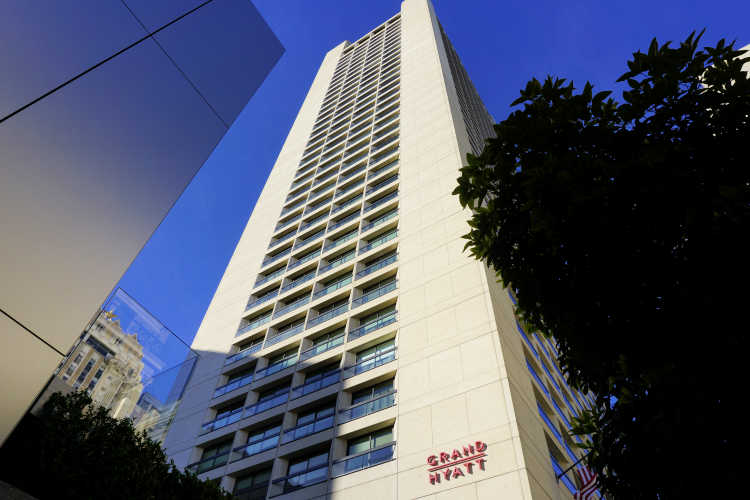
Another strong downtown option is the Financial District, just east of Union Square, with several business-friendly hotels. This is the home of banks, office buildings, and some great restaurants.
During the week, the neighborhood is busy in the daytime and early evenings but calmer on weekends when the offices are closed.
Hotels here are often more modern high-rises and a bit pricier than what you'll find in Union Square.
You're also close to the Embarcadero, which means easy access to the waterfront and the great walking paths along the bay.
Getting around is simple, and public transit runs throughout the district, on the same routes I mentioned for Union Square: the F streetcar to Alcatraz and Fisherman's Wharf, Golden Gate Transit buses to the Golden Gate Bridge, and the Muni light rail to Golden Gate Park.
Overall, the Financial District works best if you want modern downtown hotels and easy waterfront access, and you don't mind a quieter, business-focused feel on weekends.
South of Market (SoMa)

If you're visiting for a conference, South of Market is my top choice. It's close to the Moscone Convention Center and to many of the restaurants and bars that host private conference events.
The main hotel area sits south of Market Street, where you'll find historic landmarks like the Palace Hotel and newer spots like the W San Francisco. There are also great picks right near Oracle Park if you plan to catch a Giants game.
The main area has easy transit to top attractions like Alcatraz, Fisherman's Wharf, and the Golden Gate Bridge, and it's within walking distance of everything Union Square offers.
This district really has two sections, though.
The area around the Moscone Center, near Oracle Park, and along the waterfront has several higher-end spots with a few budget options.
But as you continue west, it becomes more of a warehouse district with more street activity. The hotels over there can be inexpensive, but they don't offer the same feel as the eastern side.
Overall, SoMa works best if you're staying near the convention center and waterfront side of the neighborhood and want modern hotels with easy access to downtown.
The farther west you go, the more you'll want to research your choice, because the experience can be very different from what most visitors expect.
Why I Recommend Staying in the City
You might be wondering whether it's better to stay near the airport or outside the city to save money.
If most of your trip is focused on San Francisco itself, I generally recommend staying in the city.
Being close to the attractions means you can move around more freely, pop back to your hotel during the day, and spend less time commuting.
Staying near the airport or outside San Francisco can make sense for very early flights, late arrivals, or short overnight stays.
But for a sightseeing-focused trip, the extra time and planning it takes to get into the city each day usually outweighs the savings.
For most first-time visitors, staying in San Francisco makes the whole trip feel easier and more enjoyable.
Other Tips to Know Before You Book
A few practical things come up again and again and knowing them ahead of time makes planning a lot easier:
- Parking. Many San Francisco hotels charge for parking, and it adds up fast. If you're bringing a car, check parking policies carefully before booking. In a few areas, like parts of the Marina, some hotels offer free on-site parking, which is rare and a real advantage. If you don't need a car every day, staying somewhere with good transit access simplifies things a lot.
- Do you even need a car? For most visits focused on San Francisco itself, you don't. Public transit, rideshare, and walking cover the majority of what visitors want to do, and you can take guided tours if you want to head outside the city.
- Resort or destination fees. Many hotels add a nightly fee on top of the room rate, usually covering things like Wi-Fi, gym access, or a daily happy hour. Make sure you're comparing the full nightly cost, not just the base rate.
- Airport shuttles. San Francisco hotels do not offer free airport shuttles that service the city. Plan on a rideshare or public transit to get to and from the airport, wherever you stay.
- An Airbnb reality check. Short-term rentals here are far more limited than in most cities because of local regulations — only primary residences can legally be rented short-term, so there are fewer options, and they book quickly. For most first-time visitors, hotels and boutique inns end up being the most reliable choice.
For more ways to keep costs down, see my San Francisco money-saving tips, and before you book, it's worth reading the 10 hotel mistakes to avoid. Once you've picked your area, you'll be set up for a smooth, easy trip.

Hi, I’m Jill!
I’ve been sharing San Francisco travel advice since 2009 and have helped millions of people explore the city like a local. Whether you’re dreaming of sea lions, cable cars, or a great sourdough bread bowl, I’m here to help you plan an unforgettable trip with real tips from someone who actually lives here.
 |
 |
 |
 |


Comments? Questions? Suggestions?
I would love for you to join me in my private Facebook group!
It's a great place to interact with me and others who are familiar with the area.
You can ask questions, get advice for your upcoming stay, and then share your photos and advice with others when you return home. It's a great community and the fastest way to get answers to those nagging questions about your visit!