SIGN UP FOR MY EMAIL TO RECEIVE YOUR FREE SAN FRANCISCO PLANNING GUIDE.
- Home
- Best Places to Stay
- Union Square Hotels
San Francisco Hotels in Union Square: Places to Stay in the Heart of the City

By: Jill Loeffler • Updated: June 26, 2026
Union Square in San Francisco has a large concentration of hotels, which makes it one of the first places visitors think of staying during their visit.
But is this the right place for you to stay? That depends on the kind of trip you're planning.
The short answer: if you want to be in the center of everything — shopping, restaurants, nightlife, theaters, and the best transit connections in the city, including a direct train from the airport — this is one of the easiest, most flexible bases in San Francisco.
If you're traveling with young kids, you want a waterfront base, or city energy stresses you out more than it energizes you, I'd point you somewhere else.
I'm Jill, and I live right here in San Francisco.
I'm out walking the city every day, and I know this district well.
Below, I'll give you the full picture of this district. What it actually feels like to stay here, the weather, safety, the hotels, estimates on what you'll pay, the shopping, getting around, where to eat, and the nightlife — so you can decide whether it's your spot before you book.
SFTourismTips is made possible by readers like you! If you book through my links, I may earn a small commission at no extra cost to you. Thanks for your support! Learn more.
What It's Actually Like to Stay in Union Square
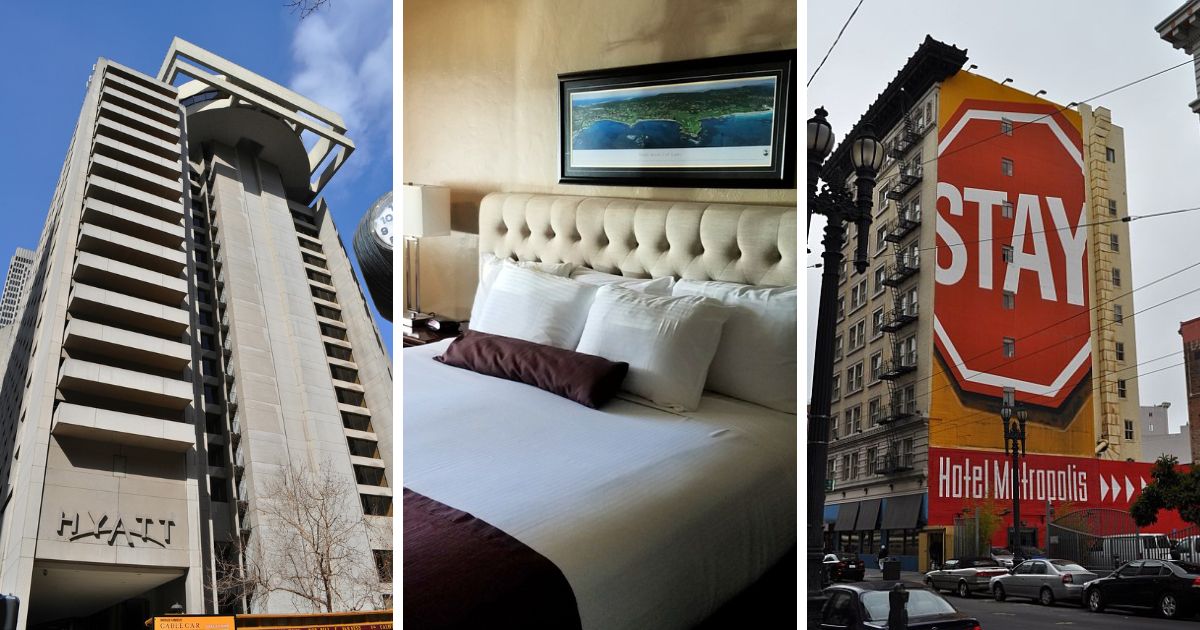
Union Square is the center of the city. Hotels, shops, restaurants, bars, nightlife — all of it is concentrated in a few blocks. When you step outside your hotel here, you're in the middle of everything.
There's foot traffic, delivery trucks, public transit, tourists, office workers, and locals running errands. It has energy from early morning until late at night, and it's a district that works for visitors and locals equally.
Parts of it are also hilly. If you're planning to walk everywhere, you'll feel the elevation changes between the square and some of the surrounding streets.
You'll find everything from top luxury hotels to budget-friendly options, department stores, independent boutiques, and a wide variety of restaurants. Theaters, galleries, and transit lines are all within walking distance or a very short ride.
And then there are the cable cars. Two of the lines — the Powell-Hyde and the Powell-Mason — start right here at the Powell and Market turnaround, the most famous cable car stop in the city.
Union Square is a great fit if you're:
- Someone who wants to be in the center of it all
- An urban traveler who wants maximum flexibility — great restaurants one night, a show the next, a day trip after that
- A solo traveler, a couple, or a group with varied interests
- A shopper, theater-goer, or anyone who wants nightlife within walking distance
- Someone who wants the easiest airport connection in the city
I'd point you somewhere else if you're:
- A family with young kids who'd prefer a quieter, more contained base (Fisherman's Wharf is a better call — busy sidewalks here, and no waterfront for kids to run around)
- Specifically, after a waterfront base
- Someone who finds city energy stressful rather than energizing
If you're already sensing this might not be the right fit, that's useful to know early. I have a full guide walking through what it's like to stay in each district around San Francisco. Start here to compare your options.
Weather in Union Square: Warmer Than the Waterfront, but Still Bring a Jacket
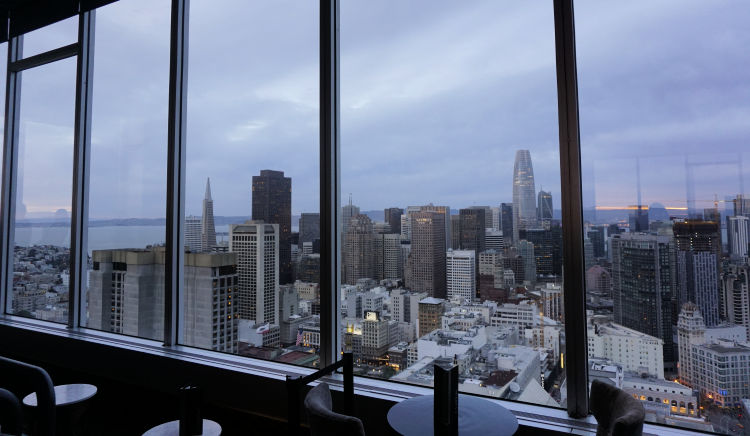
Union Square sits inland from the bay. It runs noticeably warmer than the waterfront or the western neighborhoods.
If it's 58 degrees and foggy at Fisherman's Wharf, it might be five degrees warmer and partly sunny here on the same afternoon.
That said, this is still San Francisco. The fog comes through, especially in June, July, and August.
Mornings can be gray, and then the fog might burn off by afternoon — or sometimes it doesn't.
I recommend being ready for both. The wind here is less intense than along the water, but the area still gets quite a bit of it.
Fall, September through November, is the best weather window in this part of the city: clearer skies, warmer afternoons, and usually fewer crowds. Winter is mild but gray and cool, with some rain.
I recommend always keeping a light jacket with you, all year round. Mornings and evenings can be 10 to 15 degrees cooler than the afternoon.
For a month-by-month breakdown, visit my San Francisco weather page.
Is Union Square Safe?
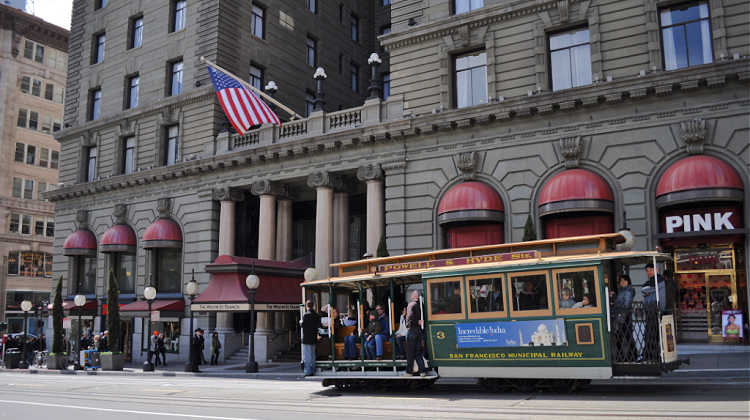 A cable car rolling past the front of the Westin St. Francis in San Francisco's Union Square District.
This is the question I get asked most about Union Square, so I'll give you a straight answer.
The core of Union Square is busy, well-lit, and active most of the day and into the evening. The square itself, the main shopping streets, and the cable car stops all feel safe.
This is not a quiet side street — there are people around constantly.
Where it gets more complicated is the southern and western edges, where Union Square borders the Tenderloin.
The boundary is roughly southwest of Taylor and O'Farrell Streets. Just be a little more cautious when you head that direction, and when you're booking, check the map. A couple of blocks here can make a real difference.
One more thing that's true everywhere in the city: car break-ins happen.
Never leave anything visible in your car — not a bag, not a jacket, nothing. That's the rule across San Francisco.
What to Know About the Hotels
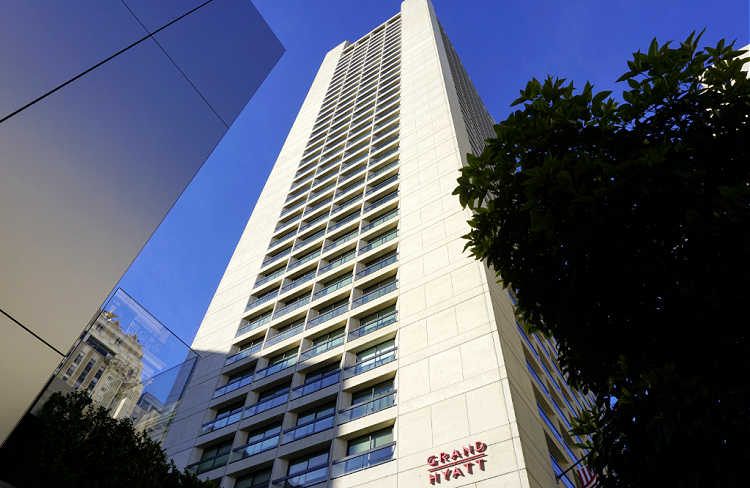
Union Square has the widest range of hotels of any district in San Francisco. You'll find internationally known luxury brands, boutique independents, reliable mid-range options, and a handful of genuinely budget-friendly properties.
The buildings here are different from those in Fisherman's Wharf, too.
Many are high-rises or taller structures, which means rooms with city views — rooftops, the skyline, the hills in the distance.
But not every building is a high-rise. Some of the most charming hotels in the district are older, historic buildings — five or six stories, smaller rooms, a lot of character.
If room size matters to you, check the square footage before you book.
Where to Book, by Location
The district runs roughly from Market Street on the south to Bush Street on the north, and from Stockton Street on the east to Taylor Street on the west. That's a walkable area, but where you land within it matters:
- Closest to the square — the most central. You're walking distance to the cable cars, the main shopping streets, and most transit lines.
- Southern edge (near Market Street and the Tenderloin boundary) — often cheaper, but that edge gets rougher after dark.
- Northern edge — puts more distance between you and the Tenderloin.
Check current rates for your dates here: browse Union Square hotels.
Luggage Hold After Checkout
Standard checkout is 11 am or noon, but most hotels here will hold your luggage after checkout at no charge.
So if your flight is in the evening, check out, leave your bags at the front desk, and keep exploring.
What It Costs to Stay in Union Square
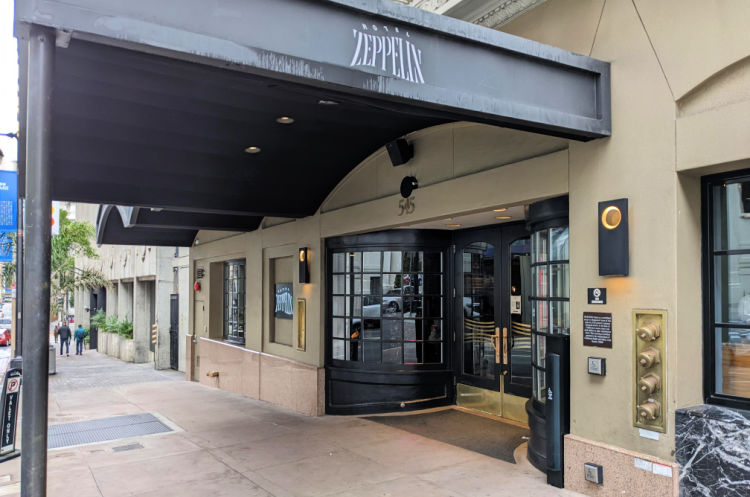
Pricing here fluctuates constantly based on events, the day of the week, and how far in advance you book. Here's a realistic picture, before taxes, resort fees, and parking:
- Low season (November–February, outside the holidays): roughly $100–$300 a night. Budget-friendly options exist in this window, and the city is genuinely enjoyable — with thinner crowds and manageable weather.
- Shoulder season (March–May and September–October): about $150–$375 a night. Honestly, the sweet spot — more consistent weather, the city is active but not overwhelmed, prices are reasonable.
- Peak summer (June–August): starts around $200 a night at the low end and goes well beyond $500 on the most in-demand dates. Midweek is always cheaper than weekends.
One thing that makes this district special in terms of price: Union Square sits close to the Moscone Center, so it's especially sensitive to the convention calendar.
When a big conference fills that center, hotel rates across the whole district spike — sometimes significantly.
Dates That Spike — Book These Early
- Salesforce Dreamforce (typically the fall, usually September): The single biggest event that moves hotel rates in the entire city. If your dates overlap, know it before you book — and book another time if you can.
- New Year's Eve: Union Square is a popular base for people heading to parties or to catch the fireworks along the waterfront. Book early for NYE.
- Big concerts, festivals, and games: When Golden Gate Park, Chase Center, or Oracle Park has a major event, rates in this district climb. Do a quick check on what's happening that week before you finalize.
Before you confirm any booking, search the event calendar for your dates. You can find my monthly San Francisco calendars here.
Parking and Whether You Need a Car
Parking here is expensive and unnecessary for most trips. Some hotels have on-site parking, some offer valet only, and many of the older, smaller properties have nothing at all.
Hotel parking typically runs $35 to $80 or more per night. Your best rates are usually at the independent garages throughout the district — cheaper than hotel parking and no valet required.
Just make sure you can access your car 24/7 if you need it.
Some of the independent garages close at night. Some allow you to leave it there overnight, while others require you to move it out before they close.
If you do need a car, that's where I'd start.
If you need a car for just one day — Wine Country, Muir Woods, Yosemite — rental locations are nearby. Rent for that day and skip the daily parking cost for the rest of the trip.
Or skip the driving entirely. A guided day tour is what I recommend for most visitors — you get the day trip without the car, the parking, or the navigation. Here are the ones I'd start with:
Watch for Resort Fees
Many San Francisco hotels add a nightly amenity fee — anywhere from $10 to $40 or more on top of your room rate, for things like a gym, happy hours, or in-room extras.
It's not optional. Always look at the total nightly cost before you book, not just the base rate.
And a note on views: city view rooms cost more.
If you're the type to pour a glass of wine and watch the city lights in the evening, I think it's worth it.
The Shopping
I want to give this its own section because it's a real reason people choose to stay here.
This is San Francisco's primary shopping district — department stores, designer flagships, independent boutiques, and galleries, all within a few blocks of the square.
If shopping is part of your trip, this makes a great base.
Right on the square, you'll find Louis Vuitton, Macy's, an Apple Store, and the Nintendo Store — a newer addition and very popular.
Just to the east, Maiden Lane offers more high-end shopping.
What Else Makes Union Square Special
A couple of other things make this district a special place to stay.
In spring and into early summer, the area takes part in Union Square in Bloom — flowers on the buildings, shops, and hotels throughout the district. It's a lovely time to be here.
From mid-November through December, the district transforms. The square gets decorated, the stores are lit up, the hotels turn on their holiday lights, and shoppers come in from all over the Bay Area.
It's genuinely festive — and genuinely crowded, especially on weekends.
If you want to be in the middle of that energy, this is the right call, so book early. Hotels fill up fast in this window.
If you'd rather skip the crowds, stay somewhere quieter and come over just for the shopping.
Getting Here and Getting Around

From the Airport
Union Square is one of the easiest districts in the city to reach from SFO.
BART, the regional rail, runs directly from the airport to Powell Street Station, right in the heart of the district. No connections, no transfers. It takes about 30 to 35 minutes and costs around $12 per person. One of the easiest and cheapest airport connections in San Francisco, and it drops you right where you need to be.
A rideshare from SFO typically runs $40 to $70 before tip, depending on traffic. It's convenient, especially with a lot of luggage.
But the BART connection here is genuinely good — better than from any other district in the city — so it's worth considering.
Getting Around Once You're Here
This is the best-connected district in San Francisco. Here's what you have within reach:
- Cable cars — start right here at Powell and Market. The Powell-Hyde line ends near Aquatic Park and Ghirardelli Square; the Powell-Mason line ends near Pier 39. Both get you to the waterfront, and they're a classic San Francisco experience. More on riding them in my cable cars guide.
- F-line streetcar — runs along Market Street and down the Embarcadero to the Ferry Building, the waterfront, Fisherman's Wharf, and the Castro. Scenic and useful.
- N-Judah streetcar — runs from Market Street all the way into Golden Gate Park. If the park is on your list (it should be), the N is the easy way there.
- T light rail — heads north to Chinatown and south to Oracle Park for Giants games and Chase Center for Warriors and Valkyries games.
- Golden Gate Bridge — Golden Gate Transit buses 101 and 120 run along Mission Street, not far from the square. No car needed for one of the most iconic spots in the world.
- Alcatraz ferries — leave from Pier 33 near Fisherman's Wharf; the F-line gets you there directly, about 20 to 25 minutes from Union Square.
This is exactly why you really don't need a car if you stay here.
What You Can Reach on Foot
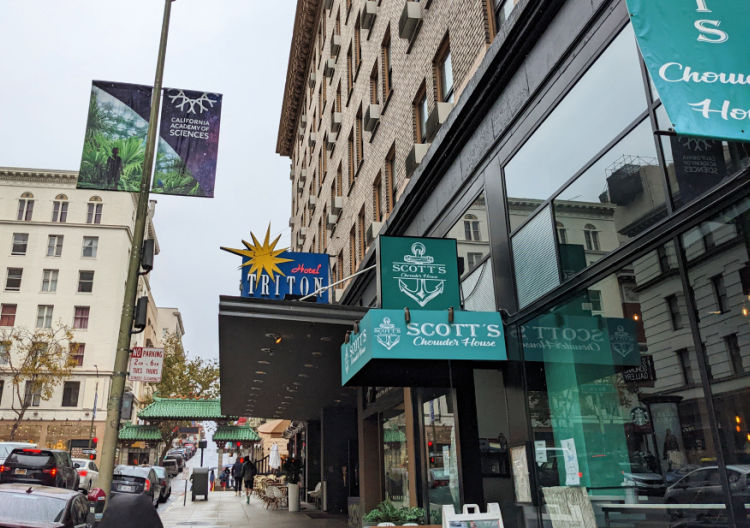
Quite a bit. Here are some rough estimates:
- Chinatown is about 10 minutes.
- The Theater District is steps away.
- SFMOMA is about 15 minutes south.
- The Ferry Building is roughly 20 minutes.
- The Moscone Center is about a 15-minute walk south of the district.
These are real city walks with real hills, but all are doable.
Where to Eat
 Dinner and a drink at Bartlett Hall, I love this place as they have great lunch options as well as handcrafted beer.
There are dozens of restaurants within walking distance of every hotel in the district — sushi, burgers, sit-down dining, quick bites. You won't have to go far for any of it.
For breakfast and lunch, these are the ones I love:
- Honey Honey
- Lapisara Eatery
- Sears Fine Food
- Pinecrest Diner (open 24 hours)
- Mason Diner
- Bartlett Hall
For the full list, I have a restaurant guide for Union Square. Check it out before your trip!
Nightlife and Entertainment
 There are SO many great neighborhood bars around Union Square. This is at the Owl Tree, which is one of my favorites.
Union Square has a real nightlife scene. It doesn't close as early as Fisherman's Wharf — some restaurants stay open later, bars stay open, and people are out.
Dinner and Drinks
A few dinner spots I recommend:
- John's Grill — a San Francisco classic, around since 1908
- Johnny Foley's Irish House — an Irish pub
- PLS on Post — a great burger and beers on tap
For drinks, the range is just as good:
- Cityscape Lounge, at the top of the Hilton — one I always recommend, with 360-degree views; on the right evening, you'll catch the sunset and the fog rolling in over the hills
- Bartlett Hall — brews on site and runs a great happy hour
- Neighborhood bars — my favorites are the Tunnel Top Lounge, The Summer Place, and the Owl Tree, with excellent beer and some tasty cocktails
For the full rundown, here's my bars-and-nightlife guide for Union Square.
Theater and Concerts
If you want to catch a show, you're in the right place.
The Theater District is right here — the Curran, the SF Playhouse, the American Conservatory Theater, and the Golden Gate Theatre, some of the best venues in the city, steps from your hotel.
And the concert venues around the city are easy to reach from here, so Union Square is a practical base for almost any show in town.
So, Should You Stay in Union Square? My Verdict
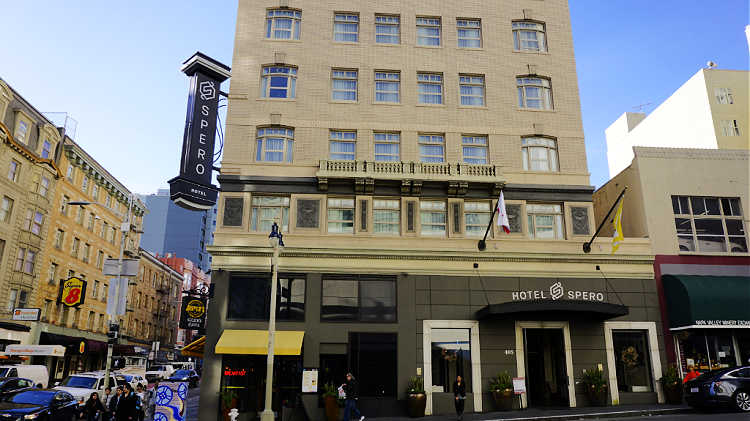
Yes — stay here if:
- You want to be in the center of everything, with the whole city within reach
- You're a solo traveler, couple, or group with varied interests
- Shopping, theater, or nightlife is part of your trip
- You want the easiest, cheapest airport connection in the city
- Flexibility matters — a different kind of night, every night
It's not the right fit if:
- You're traveling with young kids who'd do better with a quieter, waterfront base
- You specifically want to be on the water
- City energy stresses you out more than it energizes you
For most travelers who want to be in the middle of it all, Union Square is hard to beat. It earns its spot on every list — and for the right trip, it delivers.

Hi, I’m Jill!
I’ve been sharing San Francisco travel advice since 2009 and have helped millions of people explore the city like a local. Whether you’re dreaming of sea lions, cable cars, or a great sourdough bread bowl, I’m here to help you plan an unforgettable trip with real tips from someone who actually lives here.
 |
 |
 |
 |


Comments? Questions? Suggestions?
I would love for you to join me in my private Facebook group!
It's a great place to interact with me and others who are familiar with the area.
You can ask questions, get advice for your upcoming stay, and then share your photos and advice with others when you return home. It's a great community and the fastest way to get answers to those nagging questions about your visit!